Why Liberals and Conservatives Have Different Brain Structures
The finding is real and it replicates. The way we talk about it afterward is where things go wrong.
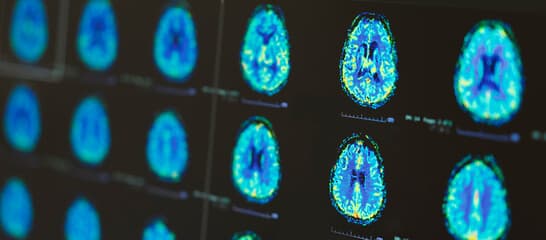
Every few years a headline claims scientists have found "the conservative brain" or "the liberal brain," usually next to a colourful MRI scan and a confidence the underlying research doesn't actually have. I want to make the opposite mistake less often made: taking the finding seriously without turning it into a scoreboard.
This is part of an ongoing series — start with the hub page for the full argument.
The study, plainly stated
The finding traces back most prominently to a 2011 study led by Ryota Kanai and colleagues at University College London, published in Current Biology, which used structural MRI to compare brain volume against self-reported political orientation in young adults. The results have since been replicated with reasonable consistency: greater conservatism correlated with larger grey matter volume in the amygdala, the brain's threat-detection and fear-conditioning hub. Greater liberalism correlated with greater grey matter volume in the anterior cingulate cortex — the region responsible for conflict monitoring, error detection, and tolerating ambiguity.
This tracks with decades of separate trait research: conservatism correlating with higher threat and disgust sensitivity and a preference for order; liberalism correlating with higher tolerance for ambiguity and novelty. The brain-imaging data didn't invent that pattern. It gave it a physiological floor to stand on.
Where I think most coverage of this gets it wrong
Three caveats, and I'd argue they matter more than the finding itself.
These are population-level averages with enormous overlap between groups. You couldn't scan a stranger's amygdala and reliably predict their vote — the effect sizes here are modest.
Correlation is not direction, and this is the part people are most eager to skip past. A larger amygdala correlating with conservative identity doesn't prove brain structure causes political orientation. It's equally plausible — and most researchers in this space now assume something like it — that sustained patterns of thought and behavior gradually reshape brain structure through neuroplasticity, the same mechanism by which any repeated mental practice leaves a physical trace. Structure and orientation likely shape each other over time, not in one direction only.
And "liberal" and "conservative" are culturally contingent labels tied to a specific study population at a specific historical moment, not a universal law of political brains.
The temptation I want to push back on directly
The obvious move is to weaponize this — "my side has the more evolved brain region" as a conversation-ending mic drop. I think that's not just a misuse of the data, it's a betrayal of what the finding is actually telling us: that political temperament isn't chosen the way we choose a policy position. It emerges from a mix of biology, environment, and experience that starts shaping the brain's threat and novelty circuits long before anyone can articulate a political philosophy.
It also means the person across the table in a political argument isn't simply failing to see facts you can see. Their brain may genuinely be weighting threat, order, and novelty differently than yours — which is a far harder problem than "they need better information," and one I take on directly in Why You Can't Reason Someone Out of a Political Belief.
Frequently asked questions
Do liberals and conservatives really have different brains? Structural neuroimaging studies, most notably Kanai et al. (2011), have found replicated average differences in amygdala and anterior cingulate cortex volume that correlate with political self-identification. These are population-level tendencies, not individual predictions.
Does this mean political views are biologically fixed? No. The relationship between brain structure and political orientation likely runs in both directions — temperament shapes political leaning, and sustained political and social experience can reshape brain structure over time through neuroplasticity.
Is one political brain type "better" than the other? No. Threat sensitivity and ambiguity tolerance are both adaptive traits suited to different problems; neither is a marker of intelligence or moral superiority.
Part of the series on the neuroscience of political tribalism. These themes are explored further in The Neuropolitics of Polarisation by Habib Hassan Yussuf.
More from Opinion

The AI Trade's Circular Logic Meets China's Chip Breakthrough — And Wall Street Doesn't Like the Math
Nvidia's fresh $750 billion round of AI deals reignited fears of circular financing just as a Chinese state-backed firm revealed it is mass-producing homegrown DUV lithography machines and memory maker CXMT went public. Add Apple's own lobbying to use blacklisted Chinese DRAM chips, and the contradictions in the AI trade and US tech policy are showing all at once.

Trump's Iran Pause Looks Like TACO Again — And the 'Talks' He Claims Aren't the Talks Actually Happening
Trump halted strikes on Iran after roughly two weeks, framing it as progress toward talks with Tehran. Iran says it has no negotiations with the United States at present — the actual talks underway are a separate Iran-Oman bilateral channel on Hormuz shipping traffic. Add in a blunt Pentagon warning about depleted munitions, and this is starting to look like the same pattern critics labeled 'TACO' back in April.

China Isn't Catching Up to the US Anymore. On Most Fronts, It's Already Ahead.
Rare earths, solar, batteries, EVs, naval shipbuilding, AI enterprise adoption, biopharma patents, and now a Nobel laureate leaving Berkeley for Tsinghua — the list of fronts where China leads outright, not just competes, has gotten too long to explain away as isolated exceptions.