The Neuroscience of Political Tribalism
We keep treating political division as an argument that better facts could resolve. The evidence increasingly says otherwise: it's a fast-thinking survival response wearing an argument's clothes.
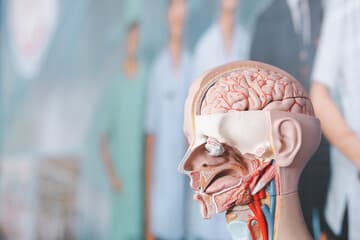
I don't think we're arguing about politics anymore. Not really. I think, in a great many exchanges, we're running an ancient, pre-verbal threat response and calling it a debate — and I've spent enough time in the research to say so with some confidence.
Daniel Kahneman's dual-process model gives this a name that's become almost too familiar to notice anymore: System 1, fast and automatic, running on heuristics and emotional impressions; System 2, slow, effortful, and analytical. What I think gets lost when people cite Kahneman casually is how directly this maps onto political cognition specifically. Confronted with an unfamiliar face, an unfamiliar claim, an unfamiliar "other," System 1 doesn't pause to gather evidence. It categorizes fast, and it categorizes toward threat, because that bias cost our ancestors far less than the alternative ever did.
This is the hub piece for a series making that case in detail. It draws directly on the argument I make at length in The Neuropolitics of Polarisation.
The brain scans are not a rumor
Here's the part I think people underrate: this isn't just a metaphor borrowed from behavioral economics. Structural neuroimaging research — most notably a widely cited study led by Ryota Kanai and colleagues, published in Current Biology — found measurable, replicated differences in brain structure correlating with political self-identification. People identifying as more conservative showed larger amygdala volume, the structure central to threat detection. People identifying as more liberal showed greater grey matter volume in the anterior cingulate cortex, the region that monitors conflict and tolerates ambiguity.
I want to be precise about what that does and doesn't mean, because I think this finding gets abused in both directions. It is not proof that one side's brain is "better." It is evidence that political temperament has a measurable physiological substrate — which should unsettle anyone who assumes their own politics arrived through pure, unbiased reasoning.
Oxytocin doesn't make you kinder. It makes you more tribal.
I think the most misunderstood molecule in this whole discussion is oxytocin. Pop science calls it the "love hormone." The research tells a more complicated story. Carsten De Dreu's experimental work found what he termed a "tend-and-defend" profile: oxytocin intensifies trust and bonding toward the in-group at the exact same moment it heightens suspicion toward the out-group. It's not a universal warmth switch. It has a boundary built into its chemistry.
That matters politically because it dismantles a comforting assumption a lot of well-meaning people hold — that if we all just felt more connected to each other, tribalism would dissolve on its own. It won't, because generic fellow-feeling isn't how the molecule works. The actual task, as I see it, is the much harder one: consciously stretching the boundary of who counts as "in-group" through deliberate cognitive effort, not waiting for a warm feeling to do it for us.
Certainty is a dopamine reward, and that's the trap
The mesolimbic dopamine pathway — the same circuitry implicated in addiction and reward-seeking generally — fires when a belief gets confirmed. It registers disconfirming evidence as, in a real neurochemical sense, aversive. I think this explains something that pure "misinformation" framing misses entirely: people aren't failing to update their beliefs because they lack access to facts. They're often declining to update because updating is neurochemically unpleasant and staying put is neurochemically rewarding.
What I'm actually arguing
I'm not arguing that political convictions are meaningless, or that biology is destiny — the research doesn't support that, and I think it would be an intellectually lazy way to end this argument. What I'm arguing is that the mechanism of political conflict is older, more automatic, and more physiological than most public debate is willing to admit, and that naming the mechanism honestly is the precondition for doing anything serious about it.
That's the throughline of the rest of this series: the structural brain differences behind left and right, and — because diagnosis without a remedy isn't much use to anyone — the practical, evidence-based tools for staying regulated when a political conversation starts to feel like a fight.
Frequently asked questions
Is political tribalism really rooted in brain structure? Structural neuroimaging research has found measurable, replicated correlations between political self-identification and the volume of specific brain regions, including the amygdala and anterior cingulate cortex. These are population-level associations, not individual predictions.
Does oxytocin reduce political hostility? No — research shows oxytocin has a "tend-and-defend" profile, intensifying in-group trust while simultaneously heightening out-group suspicion, rather than producing generalized warmth toward everyone.
Why is it so hard to change someone's political mind with facts? Confirmatory information activates the brain's dopaminergic reward circuitry, while disconfirming evidence registers as aversive. Belief change is working against a real neurochemical incentive, not just a logical one.
Continue the series: Why Liberals and Conservatives Have Different Brain Structures · Why You Can't Reason Someone Out of a Political Belief · Why Political Disagreement Feels Like a Physical Threat to Your Brain
This series draws on themes explored at length in The Neuropolitics of Polarisation by Habib Hassan Yussuf, available now.
More from Opinion
The AI Trade's Circular Logic Meets China's Chip Breakthrough — And Wall Street Doesn't Like the Math
Nvidia's fresh $750 billion round of AI deals reignited fears of circular financing just as a Chinese state-backed firm revealed it is mass-producing homegrown DUV lithography machines and memory maker CXMT went public. Add Apple's own lobbying to use blacklisted Chinese DRAM chips, and the contradictions in the AI trade and US tech policy are showing all at once.

Trump's Iran Pause Looks Like TACO Again — And the 'Talks' He Claims Aren't the Talks Actually Happening
Trump halted strikes on Iran after roughly two weeks, framing it as progress toward talks with Tehran. Iran says it has no negotiations with the United States at present — the actual talks underway are a separate Iran-Oman bilateral channel on Hormuz shipping traffic. Add in a blunt Pentagon warning about depleted munitions, and this is starting to look like the same pattern critics labeled 'TACO' back in April.

China Isn't Catching Up to the US Anymore. On Most Fronts, It's Already Ahead.
Rare earths, solar, batteries, EVs, naval shipbuilding, AI enterprise adoption, biopharma patents, and now a Nobel laureate leaving Berkeley for Tsinghua — the list of fronts where China leads outright, not just competes, has gotten too long to explain away as isolated exceptions.