Latin America Splits Over the Donroe Doctrine
Brazil's Lula calls it unacceptable. Colombia's Petro says he'd 'take up arms.' Regional bloc CELAC couldn't even agree on a joint statement. How the region is actually responding to Trump's revived Monroe Doctrine.
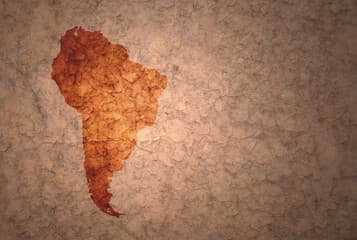
When the United States captured Nicolás Maduro in a January military operation and Trump began invoking what his administration has branded the "Donroe Doctrine," the reaction across Latin America wasn't unified condemnation or unified support. It was something messier and, in its own way, more revealing: a region visibly divided over how to respond to a great power reasserting direct military influence in what it has explicitly called its own hemisphere.
The condemnations, specific and pointed
Brazilian President Luiz Inácio Lula da Silva called the operation "unacceptable," arguing it violated Venezuelan sovereignty and set a dangerous regional precedent. Colombian President Gustavo Petro went further rhetorically, saying he would "take up arms" for his country if Trump's threats against Colombia — which the administration has floated as a potential next target — materialize into action. Cuba's government called the intervention unprecedented military aggression and declared that Venezuela would never become, in its words, a colony of any empire. Mexico, Uruguay, Honduras, and Chile have also registered strong condemnation.
The region can't even agree on a joint statement
Perhaps the clearest evidence of how deep the split runs: the Community of Latin American and Caribbean States, the region's primary diplomatic forum for exactly this kind of collective response, couldn't produce a single statement on the intervention, after nine member countries that support Trump's approach effectively boycotted the process. That's not a minor procedural failure — it's a structural demonstration that regional solidarity, which has historically been the main check on unilateral US action in the hemisphere, currently doesn't exist in a form capable of producing coordinated resistance.
What the doctrine explicitly claims
The administration's own framing leaves little ambiguity about the stakes for the wider region. Trump has openly stated Cuba "looks like it's ready to fall" and would represent a major prize if regime change succeeded there — something Washington has wanted for more than 60 years — while separately warning Colombia it could face a fate similar to Venezuela's if its government doesn't align more closely with US expectations. For a region with a long and specific memory of US-backed interventions across the 20th century, that kind of explicit, public targeting of additional sovereign governments reads less like ambiguous signaling and more like a stated intention.
Why the fragmentation matters more than any single statement
I think the more consequential story here isn't any individual leader's condemnation — it's the demonstrated absence of a unified regional response mechanism at the exact moment one would matter most. A Latin America capable of presenting a united diplomatic front might have real leverage to shape how far the Donroe Doctrine extends beyond Venezuela. A Latin America split between vocal condemnation, quiet accommodation, and open support for Washington's approach has considerably less of it. Whether that fragmentation persists as pressure on Cuba and Colombia potentially intensifies, or whether shared alarm eventually produces the coordinated response CELAC couldn't manage in January, is likely to determine how far this doctrine ultimately extends across the hemisphere.
More from World
China Turns the Rare Earth Screw on Japan Over Taiwan
After Japan's prime minister spoke about Taiwan, China tightened rare earth export controls in two escalating rounds within a single month. Japan is responding with deep-sea mining and its first new refinery since 2008.

The China-Russia-Iran Axis, Tested by War
Chinese satellite access and Russian intelligence feeds have shaped Iran's targeting of US bases. The war is the clearest real-world test yet of how far the three countries' cooperation actually extends.
NATO's Iran War Problem: Allies Feel the Costs, Not the Say
European nations are absorbing the inflation, energy costs, and military risk of a war they didn't help shape. NATO Secretary General Mark Rutte says allies opened their bases anyway — but not all of them.