Iran War Enters Its Third Straight Night as the Battle for Hormuz Intensifies
The US struck six Iranian cities overnight, Iran hit tankers and bases across the Gulf, and Hormuz traffic has dropped 52% in a week. The interim ceasefire has collapsed.
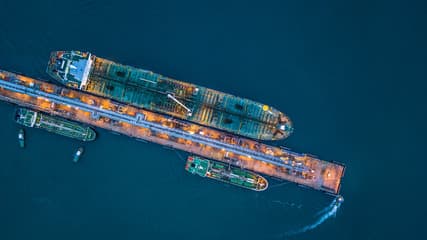
Iran War Enters Its Third Straight Night as the Battle for Hormuz Intensifies
The interim ceasefire that briefly paused the Iran war has unraveled entirely. The United States carried out strikes against Iran for a third consecutive night, with US Central Command reporting an operation that began at 4:45pm ET Monday and ran five hours, hitting targets across Bushehr, Chabahar, Jask, Konarak, Abu Musa, and Bandar Abbas — a strike footprint spanning much of Iran's southern coastline along the Strait of Hormuz.
Iran's retaliation has widened the theater
Iran responded with multiple waves of counterstrikes on Tuesday, hitting UAE-flagged oil tankers transiting the Strait of Hormuz and US military facilities in Bahrain and Kuwait. The retaliation extended beyond the Gulf's immediate waters: Jordan's army said it intercepted four missiles fired from Iran in Jordanian airspace, after Iran's Revolutionary Guard Corps said it had launched ballistic missiles at US forces and facilities at a Jordanian airbase. The geographic spread of both the strikes and counterstrikes now covers a materially larger area than the war's opening weeks in February.
The ceasefire that didn't hold
This escalation directly reverses an interim US-Iran agreement reached last month, which had aimed to reopen the strait to shipping and pause hostilities for a 60-day negotiating window. That window has now effectively closed weeks early. The European Union Aviation Safety Agency has directed airlines to avoid flying over Bahrain, Kuwait, Qatar, the UAE, and sections of Gulf of Oman airspace through July 29 — a sign that European regulators expect the current intensity to persist for at least another two weeks.
The economic toll is visible in real time
Shipping traffic through Hormuz — the passage that normally carries roughly a quarter of the world's seaborne oil trade — fell approximately 52% week-on-week between July 10 and July 12, as tanker operators reroute or wait out the escalation. Brent crude rose 2% to $85 a barrel on Tuesday as markets priced in the renewed disruption, adding to a year that has already seen oil prices swing from the high $60s to above $90 and back multiple times as the war has cycled between escalation and de-escalation.
What happens next is genuinely uncertain
Unlike earlier phases of this war, where periods of intense strikes were reliably followed by negotiated pauses, the current escalation lacks a clear off-ramp. The collapse of an agreement that was supposed to hold for 60 days — barely a month into that window — suggests both sides have concluded, for now, that further military pressure serves their interests more than the negotiating table does. For the shipping industry, regional governments, and global energy markets, the practical question isn't when this round of the war ends, but how many more rounds like it are still ahead before it does.
More from News

Houthi-Saudi Red Sea Truce Collapses: Aramco Sites Struck, Hodeidah Bombed, Maritime Embargo Declared
A four-year informal truce between the Houthis and Saudi Arabia has broken down within days: Houthi forces struck Saudi Aramco's Red Sea facilities, the Saudi-led coalition bombed Houthi positions in Hodeidah, and the Houthis have now declared a maritime embargo.
Iran War Latest: Strikes Stay Paused as Jordan Downs Drones and a Second Front Risks Opening in the Red Sea
The US bombing pause on Iran is holding into a second week, but Jordan has shot down two drones, Japan is urging Iranian flexibility, and a fast-deteriorating Houthi-Saudi standoff in the Red Sea threatens to open a second front while Hormuz remains shut.

Iran War Update: US Strikes Pause After 13 Nights as Oman Brokers Progress on Reopening Hormuz
For the first time in two weeks, the US did not announce new strikes on Iran this weekend. Tehran is calling the pause a victory while its foreign ministry reports progress in Oman-mediated talks on reopening the Strait of Hormuz — even as a separate incident with Ukraine and rising fuel prices complicate the picture at home.