The World's Oil Cushion Is Almost Gone — and Both Washington and Beijing Are Running Out at the Same Time
For five months, the world has been quietly spending down two enormous oil stockpiles to keep prices from spiraling. Both are now approaching their limits — at the same time.
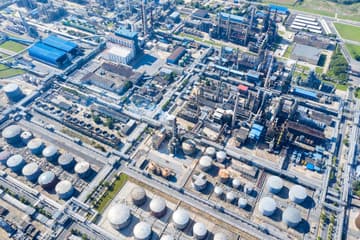
For five months, two of the world's largest oil stockpiles have been quietly absorbing the shock of the Iran war and the closure of the Strait of Hormuz, keeping prices from spiraling into the kind of crisis that would otherwise already have arrived. Both are now approaching their limits, within months of each other — and there is no obvious replacement buffer waiting behind them.
America's reserve is at a four-decade low
The US Strategic Petroleum Reserve has fallen to 316.5 million barrels — its lowest level since April 1983. The reserve has been drawn down by roughly 98.9 million barrels since the Strait of Hormuz closed on February 28, as part of a coordinated 172-million-barrel release organized through the International Energy Agency. US commercial crude stocks, separately, have also been drawn to around 409.7 million barrels.
The IEA has characterized the broader disruption as the largest supply shock in the history of the global oil market. Global observed oil inventories fell by 143 million barrels in May alone — a drop of roughly 4.6 million barrels a day — and have been declining by an average of 3.8 million barrels a day since the conflict began. The IEA projects inventories will keep falling by 5.1 million barrels a day through the second quarter and by a further 2.2 million barrels a day in the third quarter.
China has been burning through a billion-barrel stockpile
China entered 2026 holding an estimated 1.4 billion barrels in commercial and strategic crude reserves, built up over more than a year of aggressive buying that had added roughly 1.1 million barrels a day through 2025. That accumulation continued briefly into the new year — before the Strait of Hormuz crisis flipped China from building stockpiles to spending them.
The scale of the reversal is stark. Chinese crude imports fell from 11.39 million barrels a day in February, the last pre-war month, to just 6.36 million barrels a day in May — a drop of more than 44 percent. Chinese refiners are now processing roughly double what the country is currently importing, which means the difference is coming directly out of storage. Analysts estimate China has drawn down close to a billion barrels of stockpiled crude as a result, with most projections putting China's reserves at operational minimums sometime in the third quarter of this year.
Why this has kept prices from being far worse
China's drawdown, in particular, has functioned as an unofficial global shock absorber. Analysts had expected oil to surge past $200 a barrel once the Strait of Hormuz crisis hit — it hasn't, largely because China has been willing to spend down reserves rather than compete for scarce cargoes on the open market, keeping global prices roughly half of worst-case projections. That cushioning effect, analysts are increasingly clear, cannot continue indefinitely.
What happens when both run out at once
The uncomfortable arithmetic is straightforward: the two largest strategic buffers standing between the current level of disruption and a much sharper price shock are both being spent down simultaneously, on broadly overlapping timelines. Washington's reserve is already at a level not seen in over 40 years. Beijing's is on pace to approach operational minimums within the next several months. Neither government has signaled a plan for what replaces that cushioning capacity if the underlying conflict — and the Hormuz disruption driving all of this — continues past the point where these reserves are exhausted.
Frequently asked questions
How low is the US Strategic Petroleum Reserve in 2026? As of mid-2026, the US SPR stands at 316.5 million barrels, its lowest level since April 1983, after a coordinated 172-million-barrel IEA release drew it down by roughly 98.9 million barrels since February.
How much oil has China drawn from its reserves? China has drawn down an estimated 1 billion barrels of its crude stockpile since the Strait of Hormuz crisis began, as imports fell more than 44 percent between February and May 2026.
Why haven't oil prices spiked to $200 a barrel? Analysts credit China's willingness to draw down its strategic and commercial reserves, alongside the coordinated US/IEA release, with cushioning prices well below the worst-case scenarios initially forecast.
Sources: OilPrice.com, Fortune, CNBC, IEA Oil Market Report
More from News

Houthi-Saudi Red Sea Truce Collapses: Aramco Sites Struck, Hodeidah Bombed, Maritime Embargo Declared
A four-year informal truce between the Houthis and Saudi Arabia has broken down within days: Houthi forces struck Saudi Aramco's Red Sea facilities, the Saudi-led coalition bombed Houthi positions in Hodeidah, and the Houthis have now declared a maritime embargo.

Iran War Latest: Strikes Stay Paused as Jordan Downs Drones and a Second Front Risks Opening in the Red Sea
The US bombing pause on Iran is holding into a second week, but Jordan has shot down two drones, Japan is urging Iranian flexibility, and a fast-deteriorating Houthi-Saudi standoff in the Red Sea threatens to open a second front while Hormuz remains shut.

Iran War Update: US Strikes Pause After 13 Nights as Oman Brokers Progress on Reopening Hormuz
For the first time in two weeks, the US did not announce new strikes on Iran this weekend. Tehran is calling the pause a victory while its foreign ministry reports progress in Oman-mediated talks on reopening the Strait of Hormuz — even as a separate incident with Ukraine and rising fuel prices complicate the picture at home.