China's Economy in 2026: Growth Numbers vs. Structural Reality
China is set to grow faster than expected in 2026, upgraded by Goldman Sachs and the IMF alike. But the headline number and the underlying economy are telling two different stories.

China's 2026 growth numbers are, on paper, a good news story. Goldman Sachs revised its forecast upward from 4.3% to 4.8%, above consensus. The IMF's July 2026 update put China at 4.6% growth, one of the only major economies to receive an upward revision all year. For an economy widely assumed to be in structural decline, that's a headline that cuts against the narrative. The more interesting question is what's actually producing that growth, and whether it's the kind of growth that builds a durable economy or the kind that papers over one.
Exports are doing the heavy lifting
The growth engine in 2026 isn't domestic demand — it's exports, which Goldman Sachs expects to expand 5–6% annually, propping up headline GDP while consumption at home stays weak. That's a meaningful distinction. An economy growing because households are spending more, confident about their future, is fundamentally healthier than one growing because factories are shipping goods abroad to compensate for domestic buyers who won't spend. China is doing the latter, and it shows up clearly in the price data.
Ten quarters of deflation
China has posted persistent deflationary pressure for roughly ten consecutive quarters, with consumer price inflation averaging 0% through 2025 and forecast at just 0.8% in 2026. Deflation sounds harmless — falling prices — until you consider what drives it: weak consumer demand, oversupply relative to what households are willing to buy, and businesses cutting prices to move inventory rather than raising them because demand justifies it. Persistent deflation of this length is a symptom of a demand-side economy that hasn't recovered from a series of shocks, chiefly the property market collapse.
The property crisis, five years in
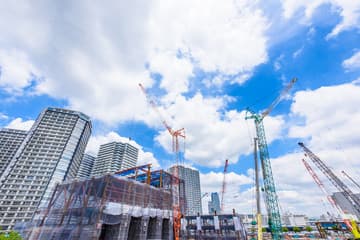
2026 marks the fifth year of China's property downturn since the market peaked in 2021, and the numbers remain severe: new home starts, sales, and property investment are running 50–80% below their 2020–2021 peaks. Property was for decades the primary vehicle through which Chinese households built wealth and local governments funded services — its collapse has knocked out both household net worth and a major channel of local government revenue simultaneously. The good news, relatively speaking, is that the drag on GDP growth is narrowing, from roughly 1–2 points in the worst years to an estimated 0.5–1 point in 2026, with property indicators expected to decline a further 5–10% in 2026 before nearing stabilization in 2027.
Two economies, one number
The tension in China's 2026 data is that the headline growth figure and the on-the-ground economic experience are diverging. GDP is growing at a rate most Western economies would envy, driven by an export machine operating near full capacity. Meanwhile domestic consumers are dealing with falling home values, weak wage growth, and a deflationary environment that makes them warier about spending — a self-reinforcing cycle that's hard to break through export strength alone, since exports don't directly restore household net worth or confidence.
What to watch next
The rebalancing story that the World Bank and others are tracking centers on whether Beijing can shift the growth engine from exports and investment toward domestic consumption without triggering a sharper slowdown in the transition. That's the real 2026 story beneath the headline number: not whether China grows, but whether it grows in a way that resolves its structural imbalances or simply defers them further into the property sector's sixth, seventh, and eighth years of decline.
More from Financial

Demographics as Destiny? China's Shrinking Workforce and Its Economic Ceiling
China's working-age population is projected to shrink 22% by 2050. Here's how demographic decline interacts with growth, pensions, and the risk of 'getting old before getting rich.'
The Real Estate Crisis Reshaping China's Economy
China's property downturn is entering its fifth year, with activity down 50-80% from 2021 peaks. Here's how a real estate crisis became a structural economic problem.

Is the Dollar Losing Its Grip? Inside the De-Dollarization Movement
BRICS nations now hold 17.4% of global central bank gold reserves, and over 90% of Russia-India-China trade bypasses the dollar. What de-dollarization actually looks like in 2026.