China's AI Strategy Was Never About Beating the US on Chips. That's Exactly Why It's Working.
Kimi K3's sweep of the Frontend Code Arena isn't a fluke or a single lab's lucky breakthrough. It's the visible output of a deliberate four-part strategy — open-weight models, cheap energy, a massive engineering pipeline, and an industrial base built for scale — that US export controls were never designed to stop.
For the past several years, the dominant American framing of the US-China AI competition has centered on a single chokepoint: chips. Export controls on advanced semiconductors were built on the theory that if China couldn't access the most cutting-edge compute, its frontier AI labs would simply fall behind, regardless of talent or ambition. Kimi K3's recent sweep of six of the seven Frontend Code Arena categories — beating every US lab except Anthropic's gaming-category win — is the latest and clearest evidence that this theory has a hole in it large enough to drive an entire national AI strategy through.
The strategy China has actually pursued looks less like a chip race and more like a four-legged stool, and each leg reinforces the others in ways that make the whole structure harder to knock over than any single restriction can address.
The first leg is open-weight distribution. Rather than competing to build the single best closed model and monetize access to it the way OpenAI, Anthropic, and Google largely have, Chinese labs — Moonshot with Kimi, Alibaba with Qwen, DeepSeek before them — have released their weights openly and repeatedly. A US Congressional research analysis has described this as a deliberate "two loops" approach: an open loop that seeds Chinese model architectures into the global developer ecosystem, building dependency and adoption, feeding back into a closed loop of domestic industrial application and refinement. Every developer worldwide who builds on an open Kimi or Qwen model is, whether they intend to or not, reinforcing the industrial base behind it.
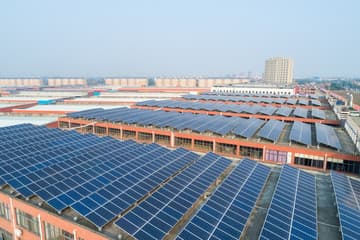
The second leg is energy, and it may be the least discussed advantage despite being one of the largest. China has what amounts to a structural surplus of cheap electricity, with provinces like Gansu, Guizhou, and Inner Mongolia offering to cut cloud providers' power bills by as much as half specifically to attract AI data center investment. The US, by contrast, faces a genuine energy bottleneck for data center buildout — grid capacity constraints that have become one of the binding limits on how fast American AI infrastructure can scale, regardless of how much capital is available to spend on it. Training and running frontier models is an energy-intensive business before it's anything else, and one side of this competition is running that business on power costs the other side can't currently match.
The third leg is raw engineering capacity. China now graduates roughly 1.3 million engineers a year, against roughly 130,000 in the United States — a ten-to-one gap that compounds year over year. At the doctoral level, China has out-produced the US in STEM PhDs since the mid-2000s. This is the talent pipeline actually building these models: reporting on labs like DeepSeek and Moonshot has been explicit that their teams are overwhelmingly trained domestically, by researchers who never left the country — meaning the "brain drain to Silicon Valley" dynamic that shaped the previous two decades of the US tech advantage is eroding at exactly the moment it would matter most.
The fourth leg is the one export controls were actually built to address, and it's the one where the controls have had the most visible, if partial, effect: cutting-edge chip access. But the response from Chinese labs hasn't been to concede the frontier — it's been architectural innovation aimed at extracting more capability from less advanced hardware, with some Chinese developers reportedly cutting compute costs by as much as 97 percent through more efficient model architectures rather than simply throwing more chips at the problem. Constraint bred efficiency rather than surrender, which is precisely the outcome export-control theory didn't fully price in.
None of this means the US has lost its overall AI lead — Claude Fable 5 and GPT-5.6 Sol still sit ahead of Kimi K3 and Qwen 3.8 on the broadest aggregate intelligence benchmarks, and the frontier labs retain real advantages in general reasoning that specific-domain wins like the Frontend Code Arena don't erase. But the strategic conversation happening in Washington still largely treats chip access as the central battlefield, when the evidence increasingly suggests China built a strategy that doesn't need to win that specific battle to win the broader war for AI adoption, developer mindshare, and applied industrial capability. A four-legged stool doesn't fall over because you saw through one leg.
More from Opinion

The AI Trade's Circular Logic Meets China's Chip Breakthrough — And Wall Street Doesn't Like the Math
Nvidia's fresh $750 billion round of AI deals reignited fears of circular financing just as a Chinese state-backed firm revealed it is mass-producing homegrown DUV lithography machines and memory maker CXMT went public. Add Apple's own lobbying to use blacklisted Chinese DRAM chips, and the contradictions in the AI trade and US tech policy are showing all at once.

Trump's Iran Pause Looks Like TACO Again — And the 'Talks' He Claims Aren't the Talks Actually Happening
Trump halted strikes on Iran after roughly two weeks, framing it as progress toward talks with Tehran. Iran says it has no negotiations with the United States at present — the actual talks underway are a separate Iran-Oman bilateral channel on Hormuz shipping traffic. Add in a blunt Pentagon warning about depleted munitions, and this is starting to look like the same pattern critics labeled 'TACO' back in April.

China Isn't Catching Up to the US Anymore. On Most Fronts, It's Already Ahead.
Rare earths, solar, batteries, EVs, naval shipbuilding, AI enterprise adoption, biopharma patents, and now a Nobel laureate leaving Berkeley for Tsinghua — the list of fronts where China leads outright, not just competes, has gotten too long to explain away as isolated exceptions.